is the START KEYFRAME. Use it as the exact visual source for the…
Промпт
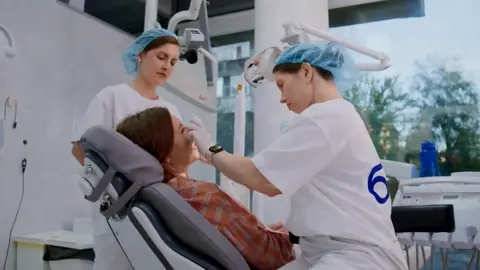
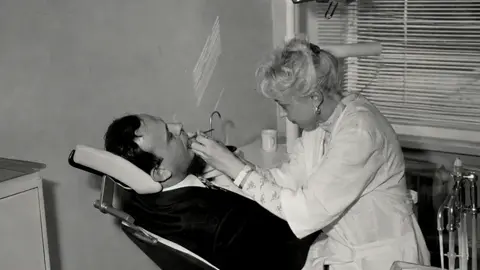
@image1 is the START KEYFRAME. Use it as the exact visual source for the black-and-white historical dental scene: the patient, dentist, old dental chair, hands, instrument, furniture, window blinds, room geometry, monochrome tones and archival photographic texture. @image2 is the END KEYFRAME. Use it as the exact visual source for the modern color dental scene: the patient, doctors, modern gray chair, gloved hands, dental equipment, bright interior, natural colors and contemporary lighting. Create one continuous photorealistic transformation from @image1 to @image2. Begin exactly with @image1 as a completely still archival photograph. After a brief pause, the old photograph gently comes to life. The patient begins breathing naturally. The historical dentist makes a small realistic movement with her head, shoulders, hands and dental instrument. The dental chair and surrounding equipment remain stable. As the historical scene starts moving, the patient, dentist, hands, instrument and chair gradually adjust toward their corresponding positions in @image2. Keep the patient’s head, mouth and chair headrest as the main visual anchors. Use these direct object correspondences: - the patient in @image1 transforms into the patient in @image2; - the historical dentist transforms into the foreground modern doctor; - the old dental chair transforms into the modern gray chair; - the historical hands and dental instrument transform into the modern gloved hands and instrument; - the old lamp and medical devices transform into the contemporary dental equipment; - the old furniture, walls and window blinds transform into the modern clinic interior. The transformation must happen through continuous geometric reshaping. Faces, bodies, hands, clothing, furniture and equipment physically evolve frame by frame until they match @image2. As the geometry begins to align, natural color gradually enters the moving black-and-white scene. Skin tones appear first on the patient and doctor, followed by clean white medical clothing, the gray chair, cool daylight and subtle blue clinic accents. The archival grain softly evolves into clean modern digital photography. Add a restrained, smooth camera push-in during the transformation. The camera may make a very small positional adjustment to help align the composition, but the movement must remain natural and almost unnoticeable. Maintain one single coherent image in every intermediate frame. Never display @image1 and @image2 simultaneously. Do not use opacity blending, crossfade, dissolve, double exposure, ghosting, split screen, flash, glowing rings, energy waves or decorative transition overlays. Preserve realistic human anatomy. Keep faces stable and recognizable. Hands must remain naturally connected to the arms. Do not duplicate people, limbs, instruments or dental equipment. The second doctor visible in @image2 should emerge naturally from the transforming background only during the final stage. The result should feel like an old black-and-white photograph waking up, beginning to move and physically evolving into the real modern color scene. End exactly on @image2, matching its people, positions, framing, equipment, lighting and colors.
Сделано на модели AI. Скопируй промпт, поменяй под себя и запусти — попробовать бесплатно.
Ещё от matvey T.
 видео
видеоПоменяй одежду мужчине на одежду из референса
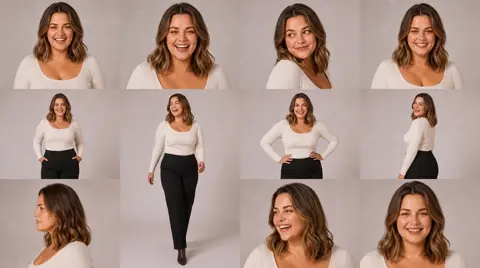
Сделай полную карту персонажа, все ракурсы, разные позы и…
 видео
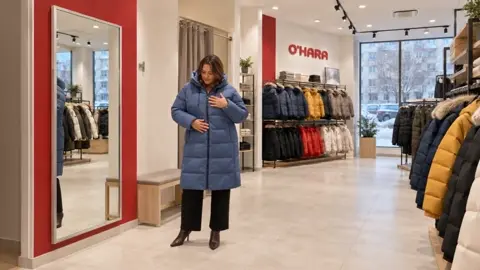
видео9:16 vertical fashion commercial, 8 seconds, modern premium…
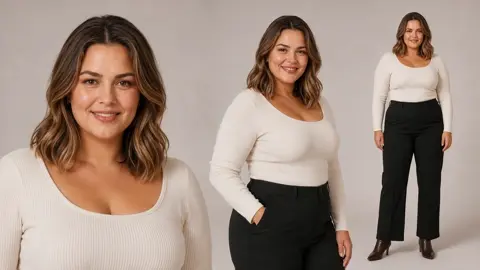
Сделай карту персонажа с такими чертами лица
 видео
видеоСделай супер фотореалистичное видео
 видео
видеоis the exact starting frame. Create a single continuous…
 видео
видеоis the exact starting frame: the historical black-and-white…
 видео
видеоDuration: 8 seconds. Horizontal 16:9. Single continuous…
Повтори это за минуту
Вставь промпт, поменяй под себя — получишь свой вариант. Без VPN, оплата картой РФ и СБП.
Попробовать бесплатно →